Slow Cooker Chicken Cooking Times: The Complete Guide
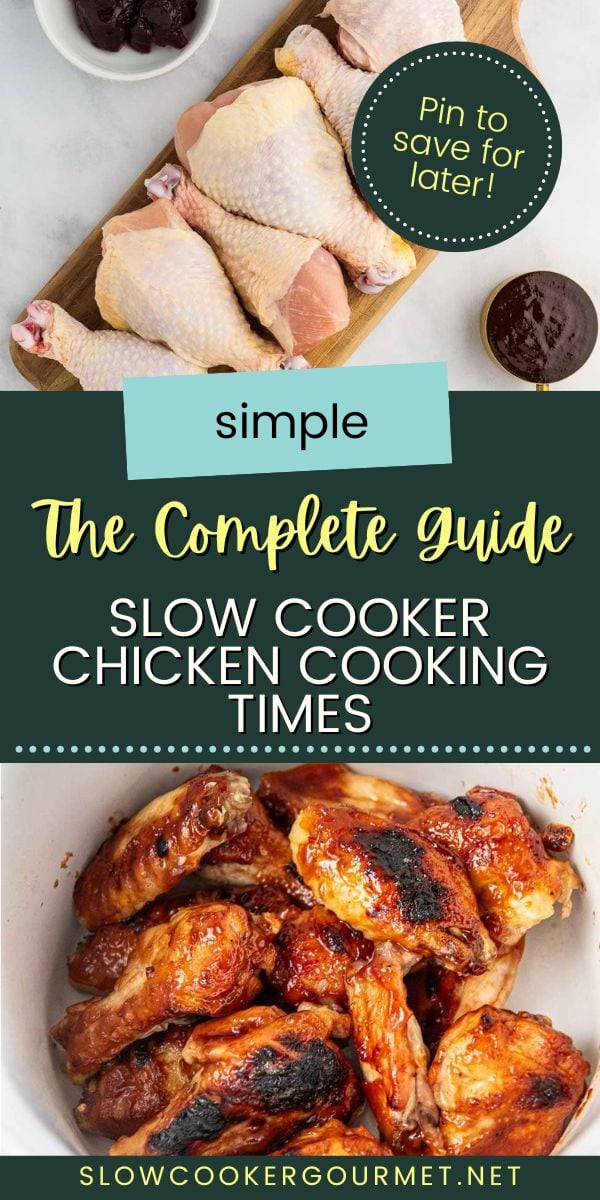
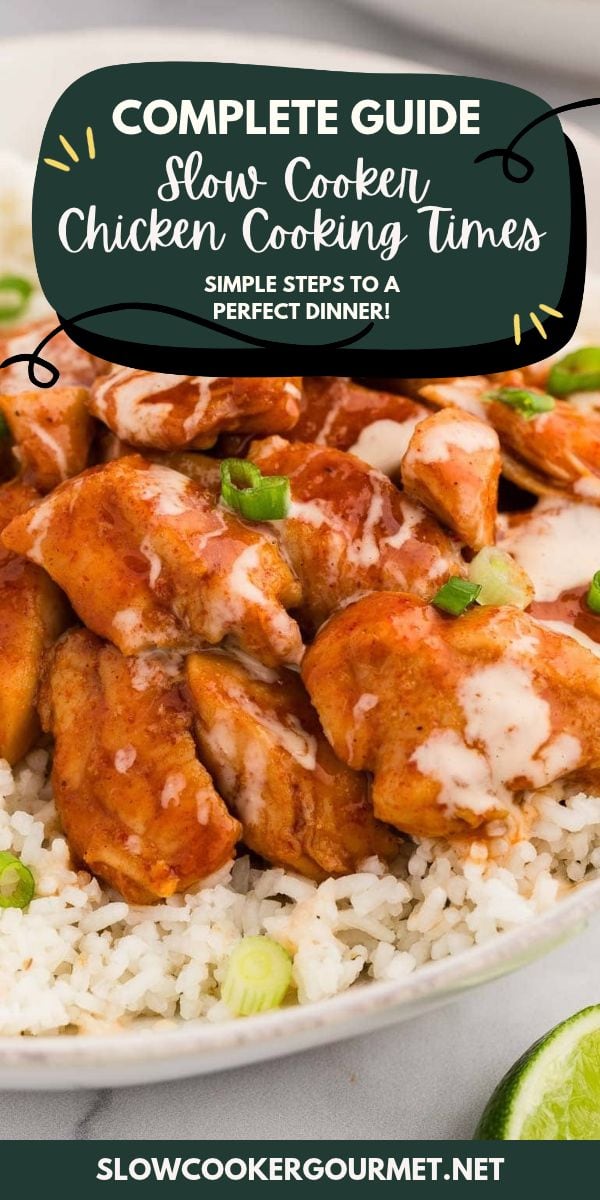
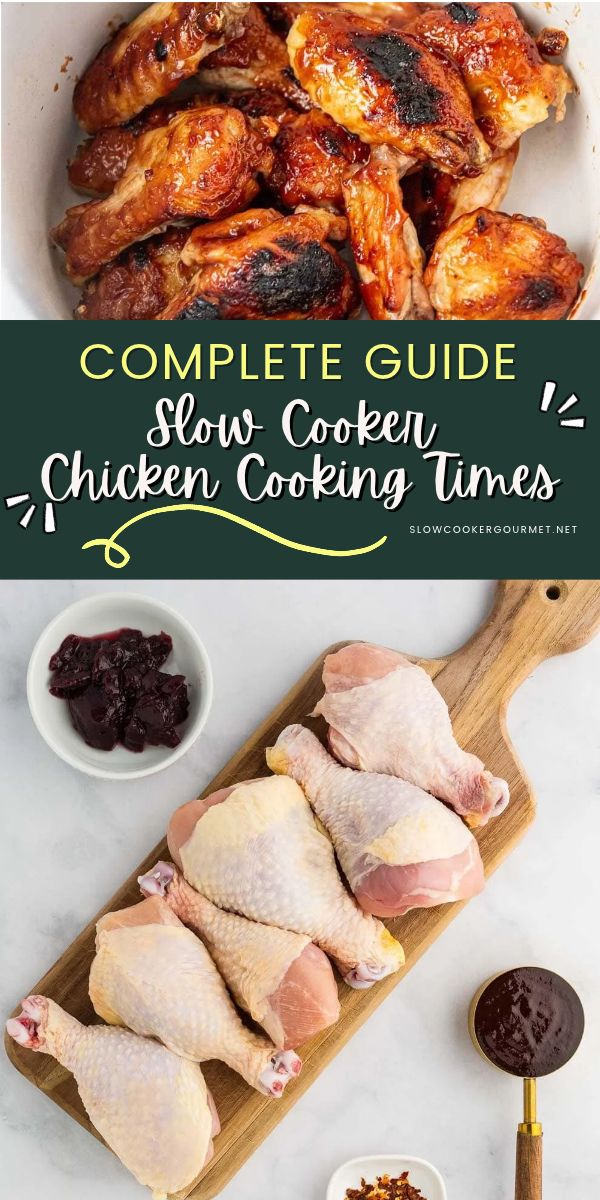
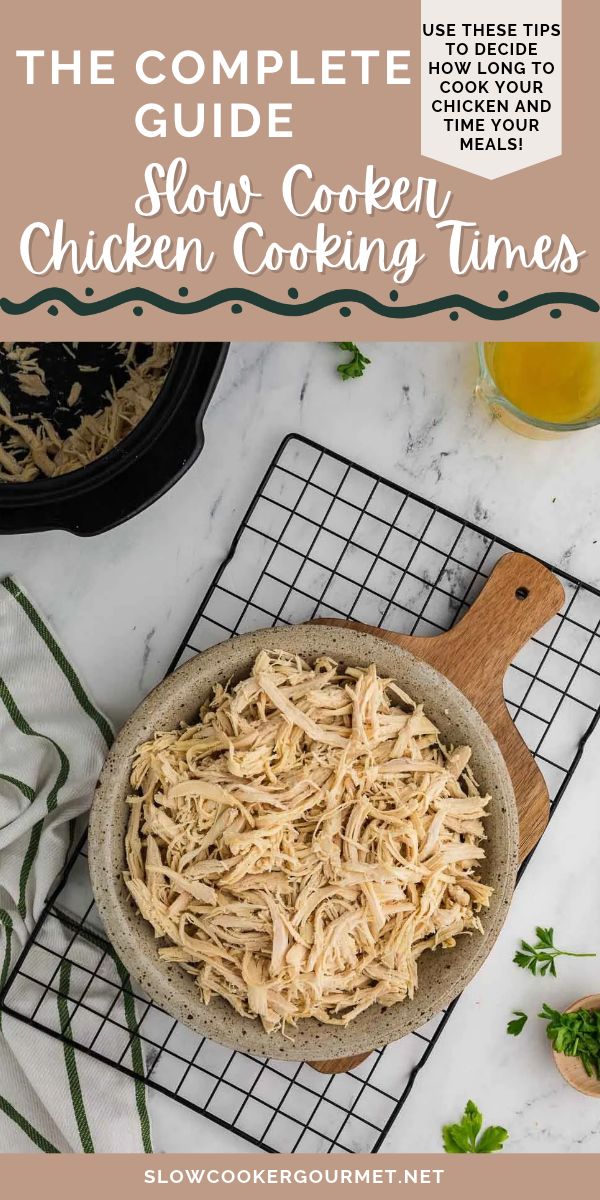
Chicken is one of the best proteins for the slow cooker, but with all the different cuts, knowing how long to cook each one can be tricky. Use these slow cooker chicken cooking times as a reference for tender results every time.

I use my slow cooker to cook all kinds of chicken: breasts, thighs, whole chickens, drumsticks, and wings. Together, the slow cooker and most of my chicken recipes are forgiving, which is perfect for those who need to be out of the kitchen or prepare meals ahead of time.
Getting dinner started ahead of time is a big reason I love slow cooking. I’m not overly fussy about the cooking process, but an instant-read meat thermometer is a must-have for slow-cooker chefs. Make sure you have one as you try out these recipes!
My approach to determining cooking flexibility depends on the dish. Chicken served in pieces and chicken cooked for shredding don’t necessarily need the same finishing texture.
Use these tips and guidelines to decide how long to cook chicken and time your meals to fit your routine.
How long does it take to cook chicken in the slow cooker?
Across the recipes below, most chicken cuts take about 2-4 hours on high or 4-8 hours on low. These times also depend on the cut, thickness, quantity, and exactly how you plan to prepare the chicken (e.g., shredded chicken breasts vs. chicken drumsticks).
In my experience, smaller pieces of chicken (wings, drumsticks, thighs, etc.) sometimes finish in about 2 hours on high or 4 hours on low.
Use these times for planning estimates, not minimum required cooking times. Chicken may reach the required temperature sooner than a recipe’s estimate. For accuracy, I cook to temperature rather than relying on the clock alone.
According to USDA’s safe minimum temperature guidance, chicken should reach 165°F when checked with a food thermometer.
Slow Cooker Chicken Cooking Chart
Over decades of slow cooker experience, I’ve tried my fair share of chicken recipes! The chart below shows examples of different ways I’ve prepared chicken across a variety of dishes. Treat this as guidance – not exact times across the board.
With any cut, use fully thawed chicken, follow the recipe’s quantities and preparation, and check the temperature with a thermometer. These examples cover the chicken-cooking stage, while any finishing sauce, broiling, rice, or noodles may add extra time.
Approximate Cooking Times from My Recipes
| Chicken Cut & Preparation | Cook Time on Low | Cook Time on High | Minimum Internal Temperature | Recipe Reference |
|---|---|---|---|---|
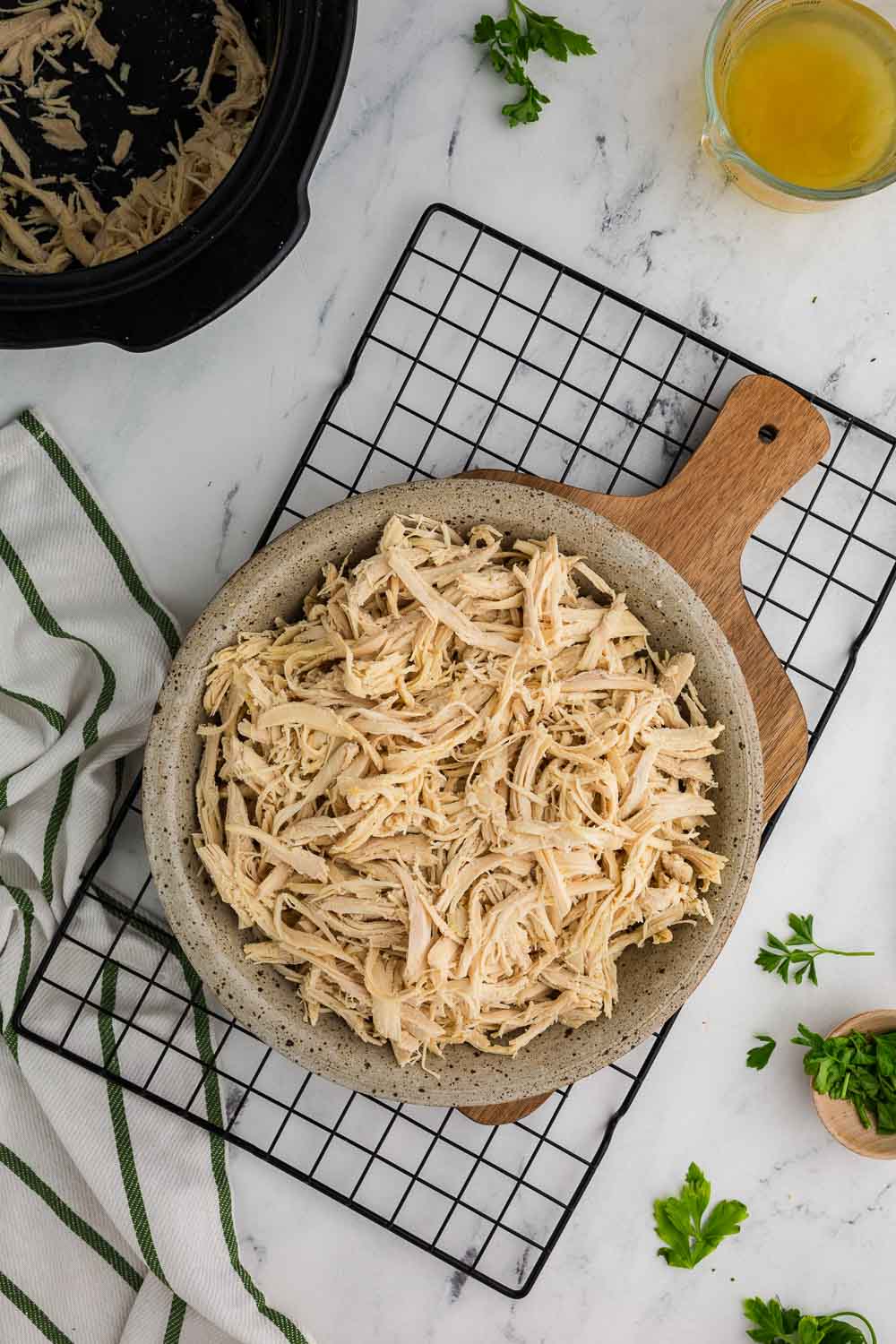
| Boneless, skinless breasts, cooked whole in sauce for shredding | 6–8 hours | 3–4 hours | 165°F | Lemon Chicken |
| Chicken breast tenderloins, browned first and cooked in tomato sauce | 4–6 hours | 2–3 hours | 165°F | Chicken in Tomato Sauce |
| Boneless, skinless breasts, cut into chunks | 5–7 hours | 2–4 hours | 165°F | Honey Sriracha Chicken |
| Bone-in, skin-on breasts, browned first and cooked with vegetables | 6–8 hours | 3–4 hours | 165°F | Herb Butter Chicken and Veggies |
| Boneless, skinless thighs in sauce | 4–6 hours | 2–3 hours | 165°F | Chicken Adobo |
| Bone-in, skin-on thighs and drumsticks | 6–8 hours | 3–4 hours | 165°F | Buttermilk Chicken |
| Drumsticks, approximately 1½ pounds | About 6 hours | About 4 hours | 165°F | Chicken Drumsticks |
| Wings, approximately 2 pounds | 4–6 hours | 2–3 hours | 165°F | Chicken Wings |
| Whole chicken, approximately 3 pounds, browned first | About 8 hours | About 4 hours | 165°F in all required locations | Whole Chicken |
Keep in mind for best results:
- Don’t keep cooking the chicken just to reach the recipe’s time if it has already reached a safe temperature and your desired texture.
- The same cut can have different timing across recipes because of how it is prepared and what ingredients are included (e.g., Slow Cooker Chicken Tikka Masala vs. Easy Slow Cooker Chicken Noodle Soup).
- My observation is that some smaller pieces finish in about 2 hours on high or 4 on low. Use this as general guidance to start checking for doneness – not to replace all recipe directions.
- For a whole chicken, check the thickest breast, innermost thigh, and wing, and avoid the bone. (More USDA food thermometer guidelines here.)
What factors affect slow cooker chicken cooking time?
Chicken Cut
Breasts, thighs, wings, and a whole chicken shouldn’t be treated as interchangeable when it comes to cooking times. To adjust the length, consider the intended result and the cut (intact pieces, chopped chicken, or meat that pulls apart easily). Chicken Adobo shows timing for whole, boneless thighs, and Lemon Chicken provides cooking times for a simple shredded chicken breast recipe.
Bone-In vs. Boneless
Chicken is extremely versatile for slow cooking since you can cook it bone-in or boneless with timing adjustments.
Follow a recipe written for the cut you’re using, and check the temperature for doneness if you substitute one for the other. Also, piece size may vary.
When you check the temperature, keep the thermometer probe away from bone for the most accurate reading.

Size and Thickness
The size and thickness of individual pieces affect slow-cooking times. Small pieces may finish much sooner than large, thick breasts. This is also why it’s best to cut pieces into uniform sizes for the most even cooking.
Avoid relying on the total package weight when estimating cooking time. Several small pieces and a few thick pieces can cook differently.
For a recipe reference using cut-up breast meat, use my Honey Sriracha Chicken recipe.
Low vs. High Setting
When chicken is cooking in liquid or sauce, I’m happy to use either setting. I generally choose the setting based on when I get the recipe started and when I want to serve it.
High cooks the meat faster, but low gives me more time, which helps if I need to start the meal earlier in the day.
I might choose high when I want a little more color, but I don’t expect truly browned or crisp chicken from slow cooking alone. If you really want a nice browning or sear, use a skillet or multicooker before starting the slow cooker.
Quantity, Cooker Size, and Other Ingredients
The amount of chicken, how it fits in the cooker (e.g., layered pieces, whole chicken, etc.), and whether the cooker runs hot all affect timing.
Follow your slow cooker model’s fill-level guidance, and use a cooker appropriate for the recipe. You don’t want to end up with chicken at unsafe temperatures by adding too much, or risk overcooking by adding too little to a larger slow cooker.
Use the Slow Cooker Size Guide to estimate the best appliance choice.
Also consider the other ingredients in a recipe and how they affect total cooking time. A meal containing vegetables or other ingredients may need a different schedule from chicken alone. I find most of my recipes pretty forgiving, so it’s more important to follow the steps and gauge the temperature than to estimate exact minutes.

How do you know when slow cooker chicken is done?
An instant-read meat thermometer is an essential tool for my slow cooker. Since I use different cookers for different purposes, timing can sometimes vary across recipes. The thermometer helps me to ensure the meat is thoroughly cooked – even when it cooks faster (or slower) than expected.
Temperature determines doneness, and chicken should always reach at least 165°F. However, when I want shredded chicken, I sometimes prefer cooking beyond 165°F until it pulls apart the way I like.
Check the thickest part of the pieces, avoiding the bone, and check several pieces if the sizes vary.
Temperature note:
- Cooking to a higher temperature can make chicken and other meats more tender and easier to shred. In my Slow Cooker Lemon Chicken recipe, I prefer to cook to 205°F, especially since it is already in a liquid sauce. This works for certain saucy shredded-chicken recipes, but it isn’t required for all chicken breast, as it can produce a tougher texture in other recipes.
- Also, just because chicken is cooked in liquid such as broth or sauce doesn’t mean it still can’t dry out. Stick to monitoring temperatures and following the recipe’s time directions.
Although appearance can give you some clues, color, clear juices, or easy shredding aren’t the most reliable signs of doneness. Chicken can sometimes remain pink after reaching a safe temperature, and the outer portions might shred more easily than the uncooked meat inside.
Follow USDA guidance for specific questions on chicken handling and cooking.
Can you cook frozen chicken in the slow cooker?
The USDA recommends thawing chicken before putting it in a slow cooker.
A slow cooker cannot safely thaw and cook frozen chicken in a way that keeps it out of the danger zone. The simplest planning advice is to thaw it in the refrigerator for up to 24 hours before cooking. (And if you forget to thaw the meat, use your Instant Pot! Find more ideas in 9 Amazing Instant Pot Chicken Recipes.)
This guideline applies to homemade freezer meals, too. Thaw any prepared freezer meals in the refrigerator before slow cooking.

Tips For Cooking Chicken In The Slow Cooker
Use an Instant-Read Meat Thermometer
Out of all my slow-cooking tips, this is my top recommendation. It takes the guesswork out of deciding whether the chicken is cooked, giving you peace of mind at dinnertime!
Be sure to check the temperature of the meat itself, not the surrounding sauce.
Choose Low or High to Fit the Recipe and Your Schedule
Low is often recommended for cooking chicken, but this doesn’t always mean it produces better results. For chicken in sauce or liquid, I generally choose whichever setting fits when I want dinner ready. Use the setting that fits your meal plans!
Pay Attention to the Chicken You Buy
In my experience, the chicken I buy can make a big difference in whether I’m happy with its final texture. I prefer organic, free-range chicken when possible.
While organic and free-range labels don’t guarantee tenderness, they can elevate both taste and texture. If this isn’t an option for your grocery list, choose the best quality you can and follow the recipe closely for accuracy.
Follow the Recipe’s Liquid Amount
Chicken does not always need to be submerged in the slow cooker.
For example, my BBQ Chicken Thighs use a small amount of broth, and the recipe specifically warns that excess liquid thins the sauce. A soup with raw chicken will certainly have different liquid needs. Don’t apply one liquid rule to every chicken dish.
Match the Finishing Texture to the Dish
For shredded chicken in sauce, I may cook beyond the safety minimum (165°F) for the texture I prefer. For chicken served in pieces, there is no reason to cook to higher temperatures for shredding purposes.
Ensure the chicken reaches its minimum temperature first, then cook to a higher temperature to finish it the way you like.
Use a Separate Step for Crisp Skin
Slow cooking alone won’t produce crispy skin. Some chicken recipes will need an added step to produce this result.
My Slow Cooker Chicken Wings are an example of chicken that I finish under the broiler. Always remove chicken from the slow cooker, use a broiler-safe pan, and follow the recipe’s finishing instructions.
Check at the Earlier End of the Recipe’s Range
This tip is especially useful with smaller pieces or a cooker that runs hot, to prevent overcooking.
Keep the lid on during cooking, except for necessary checks. Avoid repeatedly opening it to prevent heat from escaping, which ultimately lowers the temperature.

Common Mistakes When Cooking Chicken In The Slow Cooker
- Treating the timer alone as proof of doneness. Confirm the temperature rather than assuming the meat is cooked based on cooking time.
- Assuming every chicken dish needs “all day” to cook. Many chicken recipes recommend 8 hours or less, and smaller pieces can finish much sooner.
- Using frozen chicken. Always thaw the meat before slow cooking.
- Swapping cuts without monitoring progress. Thickness, bones, and preparation can change timing, so stay nearby and check doneness as the cooking time progresses.
- Adding liquid that submerges all ingredients. Unless you are intentionally cooking soup, this can dilute sauces and change the recipe. Follow the recommended amounts in proportion with the meat.
- Expecting crisp skin from the slow cooker. Use separate browning or broiling steps from the recipe to get this final result.
- Assuming sauce or liquid prevents overcooking. Chicken can still dry out or develop an unpleasant texture, even in liquid.
- Cooking all chicken to 200°F or higher. My preference for a higher temperature applies only to certain shredded chicken recipes.
- Using the “warm” setting to complete cooking times. Use this setting to hold already-cooked food according to the appliance’s instructions, not to cook raw chicken.
Frequently Asked Questions
Can You Overcook Chicken in a Slow Cooker?
Yes, chicken can overcook in the slow cooker. Slow cooking is forgiving, but chicken can still become dry, stringy, or otherwise overdone.
In my experience, the meat quality also affects the end result, and I wouldn’t automatically blame dryness on only one factor. Watch the temperature and monitor the intended texture rather than just adding more time by default.
Is It Better to Cook Chicken on Low or High?
For chicken in sauce or liquid, I regularly use both successfully. Which one I use usually depends on the recipe and how much time I have before dinner.
What Temperature Should Slow Cooker Chicken Be?
Slow-cooked chicken must reach a minimum internal temperature of 165°F, measured in the thickest part of the chicken, not the liquid. You can’t measure this by slow cooker settings and times, which is why it’s important to have a trusted thermometer on hand!
Higher finishing temperatures are a texture preference in certain recipes, and not a higher safety requirement. (Reference the USDA temperature chart for minimums based on meat cut.)
How Do You Keep Chicken from Drying Out in the Slow Cooker?
To prevent dried-out chicken, use the specified cut, follow the recipe’s liquid amount, and check doneness rather than extending the time.
My personal tip is to buy higher-quality chicken; I prefer organic, free-range when possible.
If you’re new to slow cooking, it might seem that liquid, sauce, or even the low setting can prevent overcooking; however, this isn’t always the case. If you cook chicken too long, it can turn tough or stringy, even with plenty of broth.
The “warm” setting also helps prevent dryness. If holding cooked chicken, follow the cooker’s instructions and keep food at least 140°F. Safe warming and the ideal texture are different temperature considerations (refer to the USDA holding guidance for specific examples).
Should Chicken Be Covered with Liquid in the Slow Cooker?
Chicken doesn’t always need to be covered with liquid. Use the amount specified in the recipe for the most accurate results. Adding extra liquid to a sauce-based recipe can change its consistency and flavor.
For example, my BBQ Chicken Thighs use relatively little broth, while Creamy Chicken Noodle Soup cooks raw chicken together with much more liquid and added ingredients.